
Concrete Block Walls in Pendleton, Indiana
Pendleton Concrete Works builds concrete block walls for homeowners throughout Pendleton and the surrounding area. From retaining walls to property line walls, we build with durable materials and proper drainage to hold up for decades.
25+
Years of Experience
400+
Concrete Projects Completed
4.9 ★
Average Google Rating
What Goes Into a Quality Concrete Block Wall
A concrete block wall adds structure and durability wherever a property needs it, whether that's holding back a slope, defining a property line, or supporting a foundation. Homeowners typically need a concrete block wall when dealing with a sloped yard that's eroding or unusable, when an existing retaining wall has failed or deteriorated, or when adding structure and definition to a landscaping project.
A properly built block wall does more than serve a single function. It stabilizes soil that would otherwise erode or shift, creates usable flat space in an otherwise sloped yard, and adds a clean, finished look to a property. With correct drainage and construction, a concrete block wall can last for decades without the bulging, leaning, or cracking that comes from walls built without proper attention to water management and structural reinforcement.
When You Need a Concrete Block Wall
Homeowners most often need a concrete block wall when dealing with a sloped or eroding section of their yard that's becoming difficult to landscape, mow, or simply use. Without something holding the soil in place, slopes naturally erode further with every rainfall, gradually losing topsoil and creating an increasingly uneven, unusable space over time.
For properties with an existing retaining wall, common warning signs that work is needed include visible leaning or bulging, cracks running through the blocks, or soil and water visibly pushing through gaps in the structure. These signs typically point to inadequate drainage behind the wall, insufficient reinforcement for the amount of soil being held back, or a wall that was never built with the structural requirements needed for its specific application.
Ignoring a failing retaining wall tends to lead to a sudden, more serious failure rather than a gradual one. Once a wall begins visibly bulging or leaning, the soil pressure behind it usually continues building, and a full collapse becomes a real possibility, sometimes with little additional warning. Addressing problems early, while the wall shows only minor signs of stress, is almost always more manageable and affordable than dealing with a full structural failure later.
Our Concrete Block Wall Process
We begin every block wall project with an evaluation of the slope, soil conditions, and how much weight and pressure the wall will need to manage. This determines the wall's height, the type of block and reinforcement needed, and the drainage system required behind it, since drainage is often the single most important factor in whether a retaining wall succeeds or fails over time.
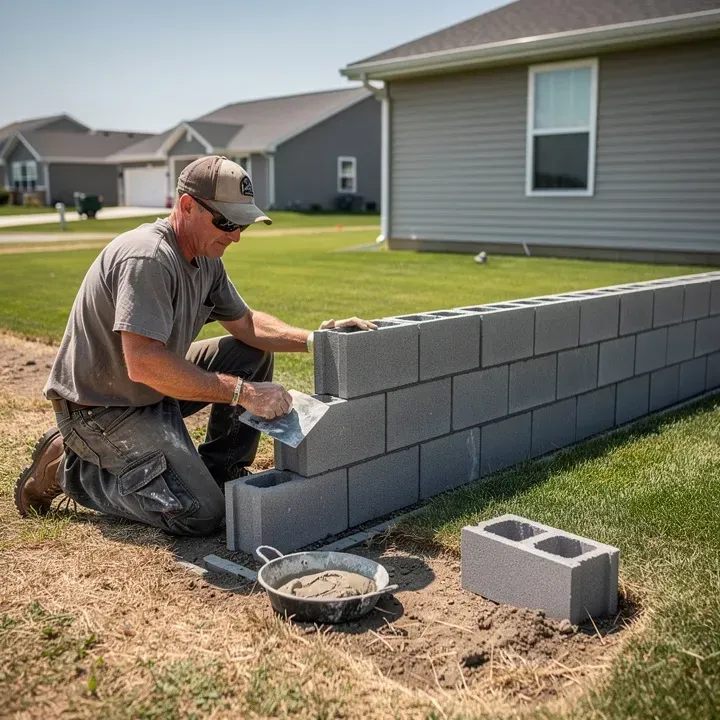
Once the design is finalized, we excavate a proper footing trench and pour a concrete footing sized to support the planned wall height. We then lay courses of concrete block, ensuring each row is properly leveled and aligned before moving to the next, while installing drainage gravel and a perforated pipe behind the wall as it's built to direct water away rather than letting it build up pressure against the structure. For taller walls, we incorporate additional reinforcement and proper backfill techniques to ensure long-term stability. Once construction is complete, we grade and finish the area behind and in front of the wall to direct surface water appropriately.
Factors That Influence Your Block Wall Quote
Concrete block wall pricing depends primarily on the wall's length and height, since taller walls require deeper footings, additional reinforcement, and more material overall to safely manage the increased soil pressure. The complexity of the site also matters, with walls requiring significant excavation, soil removal, or access challenges costing more than a straightforward, easily accessible project.
Drainage requirements play a meaningful role in cost as well, since proper drainage gravel and piping behind the wall, while essential for long-term performance, adds material and labor compared to a wall built without these considerations. Unfortunately, skipping drainage to save money upfront is one of the most common reasons retaining walls fail prematurely, so we never recommend cutting this corner regardless of budget.
Finally, any additional features, such as a decorative block facing or integrated steps within the wall design, will add to the overall project cost. We evaluate your specific property and provide a detailed, itemized quote so you understand exactly what's included and why before any work begins.
Frequently Asked Questions
How long does it take to build a concrete block retaining wall?
Most residential block wall projects take between 3 to 6 days depending on the length and height of the wall, including excavation, footing installation, block laying, drainage installation, and backfilling. Taller walls or those requiring extensive soil correction may take longer to complete properly.
Why is drainage so important for a retaining wall?
Drainage prevents water from building up pressure behind the wall, which is one of the leading causes of retaining wall failure. Without proper drainage gravel and piping, water saturates the soil behind the wall after rain, adding significant weight and pressure that the wall wasn't designed to handle, eventually leading to bulging, leaning, or collapse. We install proper drainage on every retaining wall project regardless of size, since it's essential to the wall's long-term performance.
Can a concrete block wall be used for something other than retaining soil?
Yes, concrete block walls are also commonly used for property line walls, foundation walls for additions or outbuildings, and decorative landscaping features. The specific design, reinforcement, and drainage requirements vary depending on the intended use, and we tailor each project to fit its specific purpose rather than using a one-size-fits-all approach.
How tall can a concrete block wall be built?
Concrete block walls can be built to varying heights depending on local building codes, soil conditions, and the amount of pressure the wall needs to manage. Taller walls generally require additional engineering, reinforcement, and sometimes permits, depending on local regulations. We evaluate your specific project during the quote process to determine the appropriate height and design for your needs.
Your Concrete Project Starts With One Call
Don't let a cracked sidewalk, sinking patio, or unfinished project linger another season. Contact Pendleton Concrete Works today for a free quote, and let our 25+ years of experience take the stress out of getting your concrete fixed or built right.


Contact
(765) 703-8469
Mon–Sat: 6am–7pm
Pendleton, IN
About Us
Pendleton Concrete Works is a locally owned and operated contractor with over 25 years of experience serving homeowners throughout Pendleton and the surrounding area. We're built on honest pricing, quality craftsmanship, and a commitment to standing behind every project we complete. Proudly serving Pendleton and the greater Madison County area.
© Copyright 2026 Pendleton Concrete Works. All rights reserved.
© Copyright 2026 Pendleton Concrete Works.
All rights reserved.